
A dead man washed ashore carrying Allied secrets. None of it had happened by chance.
On April 30, 1943, a body was found near Huelva, Spain. The man wore a British uniform, carried a briefcase, and seemed to have left a private life behind. The Germans were not only meant to read his papers. They were meant to believe his story.
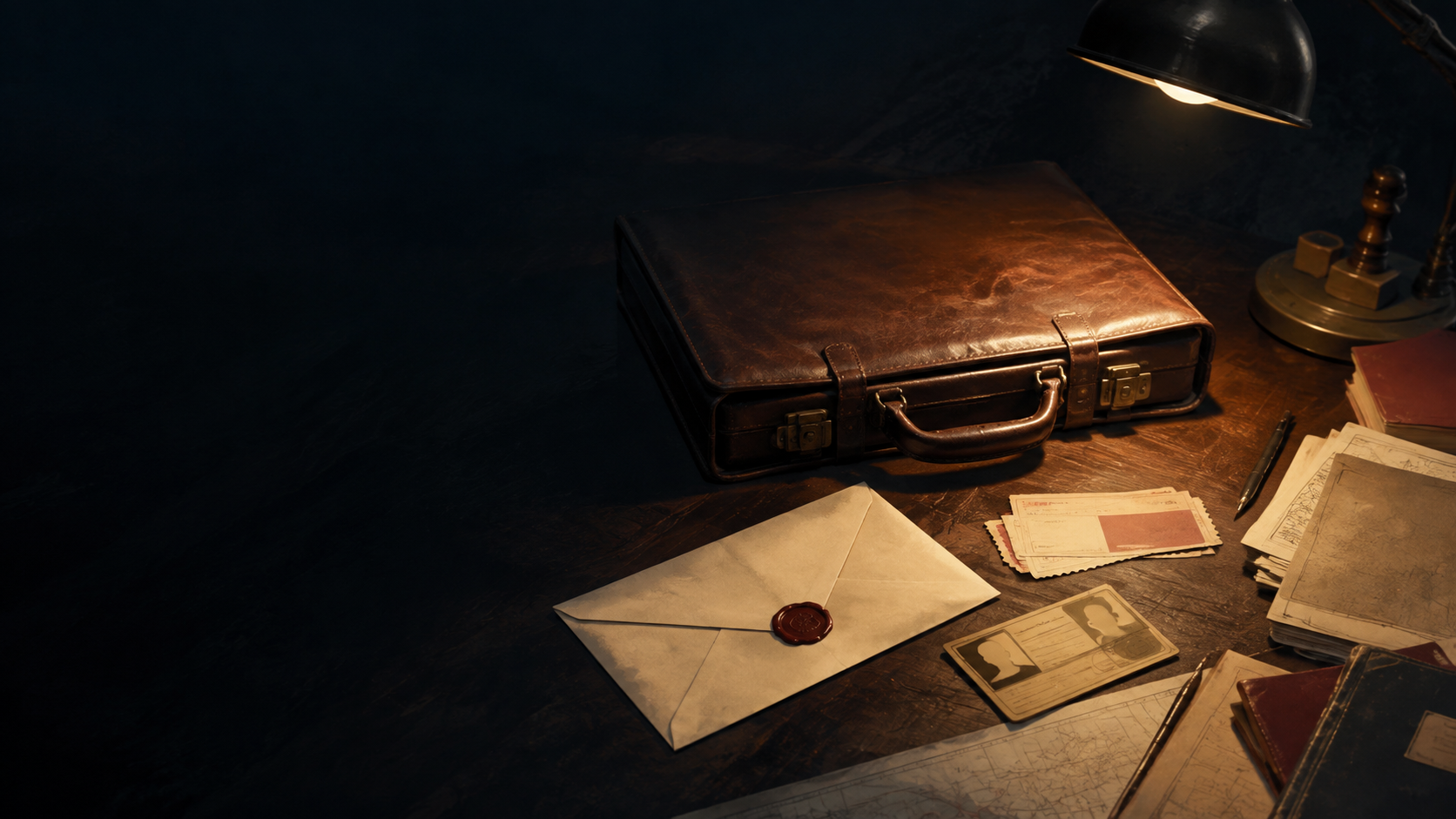
A body washed ashore in Spain with a briefcase attached to its wrist.
The papers identified the man as William Martin, a major in the Royal Marines. In his pockets were more than service documents: a photograph, letters, a receipt for a ring, tickets, and small objects that suggested a man had left his life in Britain too quickly.
The briefcase also contained confidential military letters.
For German intelligence officers in Spain, a dead British officer carrying documents of such importance was a rare opportunity. Spain was officially neutral, so the papers ought to be returned to Britain. Before that happened, however, they could be opened, copied, and passed on.
London was counting on it.
William Martin had never existed
The major was a creation of British intelligence. His uniform, papers, and mission were built around the body of Glyndwr Michael, a Welshman who had died in London.
Ewen Montagu and Charles Cholmondeley understood that a false identity alone would not work. A spy could carry a fabricated identity card. What was harder to fabricate was the ordinary clutter of a life: a fiancée who wrote, a recent expense, a photograph kept close, tickets not yet thrown away.
So they invented Pam, Martin’s fiancée. They added her letters, her portrait, a jeweller’s receipt, and details modest enough not to look as though they had been assembled to persuade anyone.
This paper life was not meant to move the British. It was meant to make the documents he carried feel real. The Germans were not supposed to think they had received a message written for them. They were supposed to think they had been lucky.
That distinction shaped the rest of the operation. If the briefcase looked too perfect, it would become suspicious. If it looked unimportant, no one would bother opening it. The private objects gave the military letters a plausible place in an officer’s life: they were there because he carried them, not because a scriptwriter wanted someone to read them.
The letters told them to look elsewhere
In the spring of 1943, the Allies were preparing to invade Sicily. To reduce the defenses awaiting them, they wanted Germany to watch Greece and Sardinia instead.
The letters carried by Martin pointed in that direction. They referred to false plans for Greece and Crete, and presented an attack on Sicily as a possible diversion. Another letter, more personal and less direct, added details meant to make the whole bundle sound authentic.
The body was taken in a dry-ice-cooled container to Scotland and loaded aboard the submarine HMS Seraph. Huelva was no accident. Currents could carry the body ashore there. The town also had a German consulate and Abwehr contacts—the German military intelligence service. The planners even counted on local conditions: a medical authority less equipped than one in Madrid would reduce the risk that an exhaustive examination might unravel their story.
The Seraph released the body offshore. The story of an officer killed in an air crash could begin.
But a convincing performance does not become a successful operation simply because a body is found. The letters had to be read. More importantly, they had to be believed.
The envelopes proved one thing, not two
Spanish authorities took possession of the briefcase. The British demanded the papers back through coded messages that sounded urgent, almost frantic. That too was part of the trap: London knew the Germans had already broken the code being used.
On May 11, the briefcase was returned to the British consul and sent on to London.
The letters carried tiny signs of interference. They had been removed from their envelopes, rolled around thin rods, and put back without tearing the paper. The British could establish one fact: the documents had been examined.
That observation mattered more than it first seems. The plan did not depend on Britain being able to retrieve the briefcase; its return had always been expected. It depended on the interval in between—nine days when the papers were accessible and when London’s urgent requests for their return could make them seem even more valuable.
That did not yet prove the deception had worked.
An intelligence officer can read a fake document, find it suspicious, and ignore it. Mincemeat’s planners needed a more important signal: a German decision that genuinely changed something.
The answer came through German communications
Britain had a decisive advantage. Bletchley Park could read some German communications. That made it possible to see what the recipients of the trap actually did with the information.
On May 14, Hitler declared that Sicily was not the next main target and called for reinforcements to Greece and Sardinia. Units were moved. Even after the Allies landed in Sicily in July, he still believed that a major attack might fall on Greece.
Mincemeat contributed to that mistake. It did not explain everything by itself. The operation was part of a wider deception plan called Barclay, and German fears about Greece already existed. Saying one corpse “won Sicily” makes a neat line, but not an accurate story.
The nuance does not diminish the feat; it makes it clearer. The sources let us follow a chain, not measure a parallel world in which Mincemeat never happened. They show a false document opened, then communications, then reinforcements moved. That is remarkable enough.
The truth is more interesting: a false life, credible documents, porous Spanish neutrality, deliberately interceptable messages, and other deception operations worked together until they altered a military decision.
The name beneath the uniform
The false Major William Martin was buried in Huelva. For decades, the grave carried the name invented for the operation.
In 1997, the Commonwealth War Graves Commission added the real name of the man whose body had been used: Glyndwr Michael.
The operation had given him a fiancée, letters, and a mission that had never existed.
The grave eventually gave him back his name.
Sources and checks
- National WWII Museum — Operation Mincemeat — letters, route, opening clues, communications, and identity.
- Imperial War Museums — Spies, Lies and Deception — personal effects and constructed identity.
- National Army Museum — Italian Campaign — Sicily’s military context.
- Denis Smyth — Deathly Deception — the operation’s place within Allied strategy.
Leave a Reply