
The Magazine Had Bought the Scoop of the Century. Two Weeks Later, the Paper Gave It Away.
In 1983, Stern opened its vaults for dozens of diaries attributed to Hitler. The story had a crashed aircraft, convinced experts and a seller no one could meet.
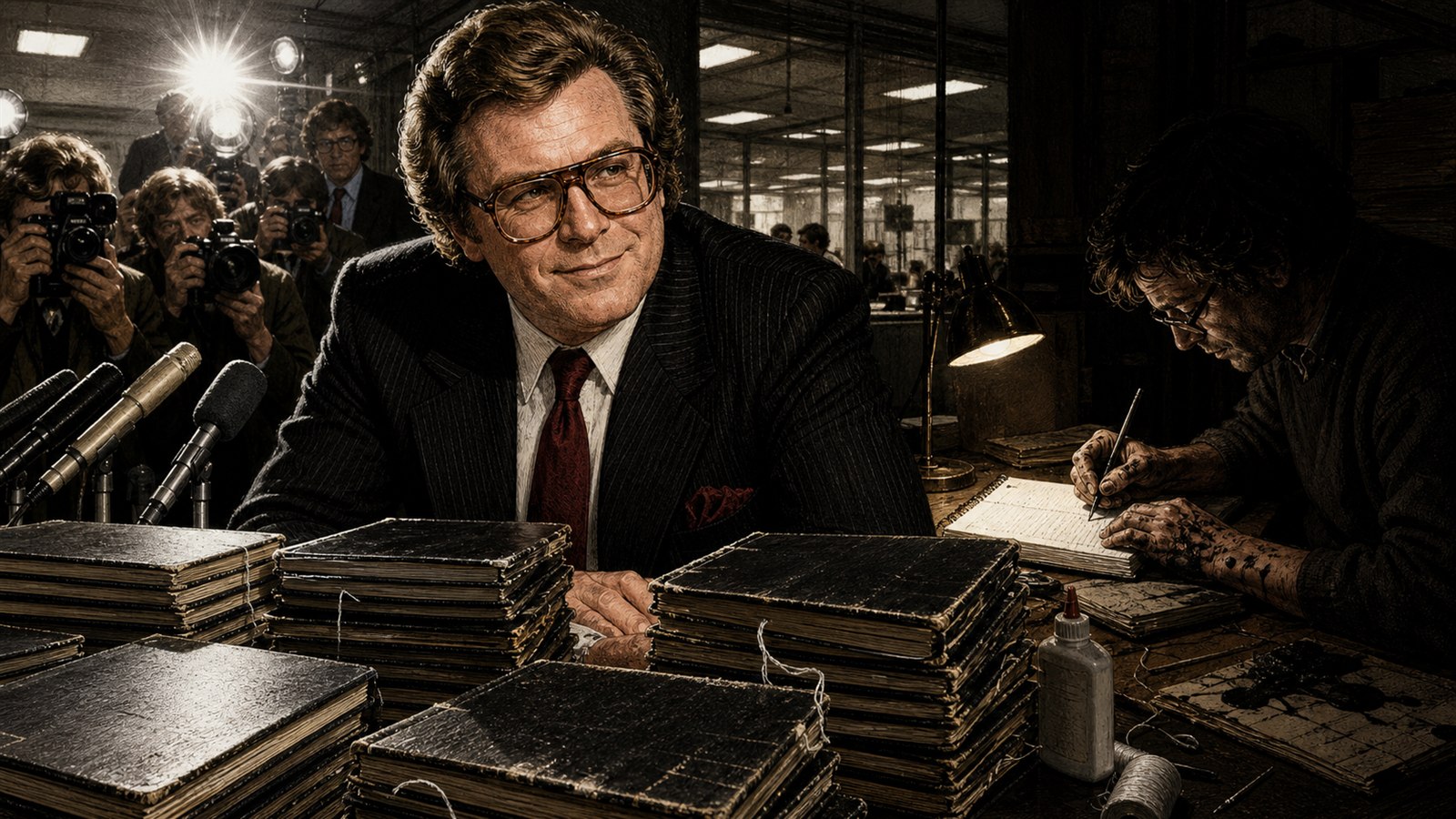
On April 25, 1983, hundreds of journalists packed the rooms of Stern’s Hamburg headquarters. On stage, the West German magazine unveiled what it called the most important documentary discovery since the war: Adolf Hitler’s private diaries.
The volumes supposedly covered the years from 1932 to the final days of the Nazi regime. Hitler, they claimed, had recorded appointments, thoughts, health problems and the daily details of a dictatorship previously observed only from the outside.
Stern was not presenting a lead. It was declaring a certainty. Its cover announced the discovery and proclaimed that much of the history of the Third Reich would have to be rewritten.
The magazine had paid more than nine million Deutsche Marks for the books. It had sold foreign publication rights. Distinguished historians had been invited to inspect them. The operation was too vast, too expensive and too public to look like an improvisation.
Yet one poisonous question hung over the celebration: who had tested the age of the paper?
Eleven days later, the German authorities supplied the answer. The diaries had not come from a Berlin bunker. They had come from a forger in Stuttgart.
It Began with a Black Notebook in a Private Collection
In the late 1970s, star reporter Gerd Heidemann became intensely interested in relics of the Third Reich. He moved among collectors of military memorabilia, bought the yacht once owned by Hermann Göring and hunted for documents that might deliver another scoop.
In 1979, he was shown a small black notebook said to have been written by Hitler. Its origin was impossible to verify, but the object came with a story designed to make belief irresistible.
At the end of the war, an aircraft carrying Hitler’s personal effects had supposedly crashed near the Czechoslovak border. Crates had been recovered and hidden in East Germany. An East German army general was now helping smuggle the diaries west, one by one, in exchange for hard currency.
The direct contact in this secret network was a man whose identity Heidemann guarded obsessively. He called himself “Fischer” and insisted on remaining unknown.
Fischer was really Konrad Kujau: painter, dealer in Nazi memorabilia and forger. He had no cache rescued from an aircraft. Whenever Stern requested another volume, he could simply make one.
Secrecy Turned a Simple Check into a Machine for Belief
Heidemann was convinced. Afraid of losing the exclusive, Stern compartmentalised the operation. Very few people knew the supplier’s identity, and specialists saw only part of the evidence.
Handwriting experts compared the diaries with documents attributed to Hitler. The similarities reassured them. The problem was that some of the comparison documents had also come from Kujau.
The forger was being authenticated by his own forgeries.
By May 1982, several opinions seemed favourable enough for the purchases to continue. More volumes arrived. The budget grew. Depending on the count used, publisher Gruner + Jahr ultimately spent more than nine million marks on sixty-two or sixty-three diaries.
The more the magazine paid, the harder it became to imagine that the first book had been false. Each new expense unconsciously served as evidence for the one before it.
And Kujau delivered exactly what his client wanted: enough familiar detail to feel credible, enough intimate revelation to justify the exclusive.
Even Famous Experts Were Shown a Story Already Wrapped and Ready
As publication approached, Stern showed the diaries to international historians. Among them was Hugh Trevor-Roper, a British specialist in Nazism and author of a book on Hitler’s final days.
He inspected the volumes under time pressure, with their provenance presented as solid and assurances that tests had already been performed. He initially declared himself convinced, then began to doubt.
At the press conference, certainty fractured in public. Historians challenged passages. David Irving, himself a controversial author, waved copies and questioned their authenticity. Trevor-Roper openly admitted that his misgivings had grown.
The scene should have stopped publication. But the cover had been printed, the rights sold and the world was waiting. On April 28, Stern published the first extracts.
At the same time, the diaries finally reached laboratories capable of answering the question the spectacular tale had pushed aside: when were their materials actually made?
The handwriting specialists had correctly recognised the same hand in several documents. What they did not know was that the hand sometimes belonged to the same forger. A comparison is only as reliable as the independent provenance of the sample chosen as its reference.
The Paper, Glue and Thread Had No Reason to Protect the Scoop
The Federal Institute for Materials Testing, the Federal Criminal Police Office and the Federal Archives examined the diaries. They ignored the crashed-aircraft story and the prestige of everyone already persuaded. They looked at the physical evidence.
The paper and labels contained components inconsistent with the 1930s and 1940s. Synthetic fibres in the bindings dated from after the war. Features of the typewriting and manufacture also betrayed a recent origin.
Archivists then studied the text. They found chronological mistakes and phrases lifted from works published long after Hitler’s death. A well-known compilation of speeches and historical documents had served as the forger’s reservoir.
On May 6, 1983, the president of the Federal Archives announced the verdict: crude forgeries. Stern halted the series after two instalments.
Less than two weeks separated the triumphant press conference from the public collapse. The materials testing did not need two weeks. It merely needed someone finally to hand over the books.
The Secret Supplier Acquired a Name, and the Magazine Lost Its Own
Konrad Kujau was identified. Gerd Heidemann was dismissed. Two Stern editors resigned. The investigation also revealed that some of the money entrusted to the reporter had never reached the forger.
The trial opened in 1984. In July 1985, Kujau and Heidemann were each sentenced to more than four years in prison for their part in the fraud.
The scandal cost more than the lost millions. For several days, one of Europe’s largest magazines had lent global authority to diaries that presented Hitler in a daily, sometimes almost ordinary light, without putting the regime’s crimes back at the centre.
Forty years later, the Bertelsmann group handed the forgeries to the Federal Archives. They are no longer preserved as records of the Third Reich, but as evidence about West Germany in the 1980s: its fascination, its blind spots and the way a media organisation can manufacture its own certainty.
The Forger Sold Paper. The Magazine Bought Permission to Believe
Kujau knew how to mimic handwriting, age a cover and supply a fresh artefact whenever one was requested. Yet his work would never have survived materials testing conducted before the bulk purchase.
The most effective part of his forgery was not in the ink. It was the story wrapped around it: an inaccessible source, a rescue behind the Iron Curtain, volumes delivered one at a time and the constant fear that a rival might discover everything.
Stern thought it had bought Hitler’s voice. What it had really purchased, at extraordinary cost, was the right to stop doubting.
Sources and fact-checking
- German Federal Archives — press conference exposing the forged diaries
- German Federal Archives — opening of the trial and purchase price
- German Federal Archives — chronology of the May 1983 examinations
- Haus der Geschichte — the object, publication and consequences of the scandal
- Haus der Geschichte — provenance, handwriting comparisons and manufactured certainty
Discussion
Have something to add?
A detail, a disagreement or a lead worth pursuing? Tell us. Comments are reviewed before publication.