
They Hired Her to Sew. On the Island, She Had to Learn Everything Else.
Ada Blackjack was neither an explorer nor a hunter. Yet she agreed to live north of Siberia because her son needed her.
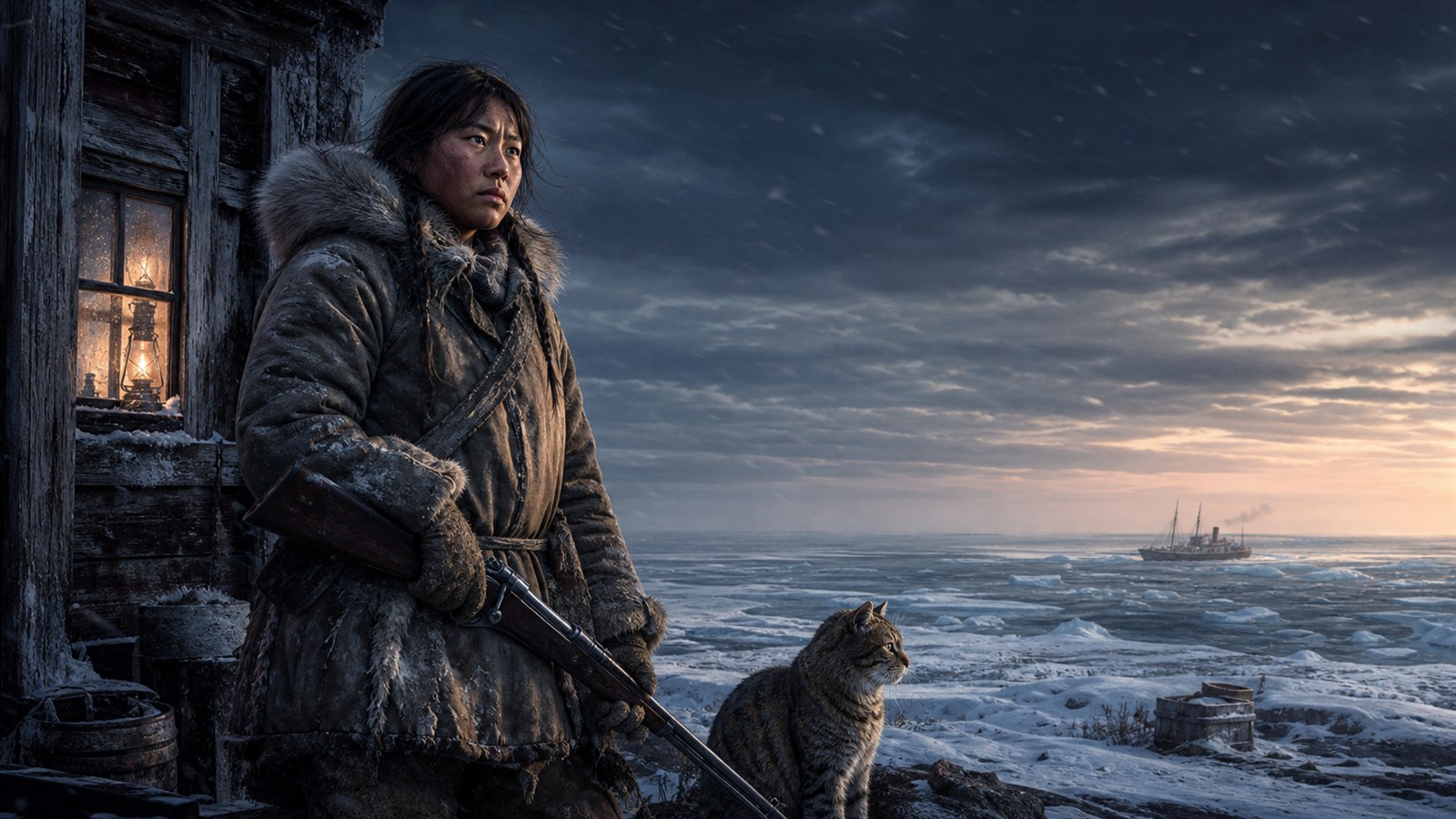
On August 20, 1923, a ship cut through the ice off Wrangel Island. On shore, a woman ran towards the beach, vanished into a cabin, emerged again, waved her arms and tried to make herself seen.
The crew of the Donaldson had come to collect five people. They found Ada Blackjack, thin but standing, with the expedition’s cat beside her.
Traces of the others were everywhere around the camp: beds, tools, notes, a camera, supplies almost exhausted. Three men had set out on foot months earlier. The fourth lay buried near the cabin.
Ada made tea for the rescuers. She showed them around, answered their first questions and learned that none of the three men who had left for Siberia had been found.
She was the only member of the expedition to return.
Two years earlier, she had been hired for one very specific reason: the explorers needed someone who could mend their clothes.
Ada Was Not Looking for Adventure. She Was Looking for a Way to Bring Her Son Home
Ada Delutuk was born in 1898 near Nome, Alaska, into an Iñupiat family. When she was eight, her mother sent her to a Methodist mission, where she learned to read, write and sew.
She married young. A few years later, her husband abandoned her with their son Bennett, who was frail and frequently ill. With no money, Ada had to place him temporarily in a children’s home. She worked as a seamstress and looked for a wage that would let her pay for his care and bring him back to her.
In 1921, an expedition began recruiting in Nome. Explorer Vilhjalmur Stefansson wanted to establish a small colony on Wrangel Island, in the Chukchi Sea north of Siberia. He sought several Indigenous families to accompany four young men.
Departure drew close, but the promised families did not come. Ada was the only Iñupiat person to appear. She hesitated at joining an all-male group, then accepted a contract paying fifty dollars a month.
She could not hunt. She was afraid of polar bears. She spoke little English and had never joined an expedition. But fifty dollars a month could change Bennett’s life.
They Were Promised That an Arctic Island Could Feed Anyone Who Knew How to Use a Rifle
The scheme rested on an idea dear to Stefansson: the Arctic was not a hostile wasteland but a land capable of feeding a competent team. The settlers would hunt, supplement their stores and remain until the next ship arrived.
They landed on Wrangel Island in September 1921: Allan Crawford, Milton Galle, Lorne Knight, Fred Maurer, Ada and a cat named Vic. Only two of the men had meaningful Arctic experience.
The provisions covered about six months. They needed to last a year. The group built a shelter, organised hunts, gathered driftwood and raised a British flag over land claimed by several countries.
Ada sewed parkas, repaired boots, prepared meals and maintained the camp. She kept to herself, sometimes terrified by the arguments and by the prospect of being the only woman on the island.
The following summer, the supply ship never arrived. Ice prevented it from reaching the coast.
The group watched the navigable season close. They no longer had enough food for a comfortable second winter.
Three Men Set Out Across the Sea Ice. No One Ever Saw Them Again
Lorne Knight was suffering from scurvy. His legs swelled, his strength vanished and his temper deteriorated. The hunters returned empty-handed more and more often.
In January 1923, Crawford, Galle and Maurer decided to seek help. They planned to cross the frozen sea to Siberia. They left camp with a sledge, dogs and carefully rationed provisions.
Ada remained with Knight because he was too ill to travel. The three figures disappeared across the ice. No message ever came back.
Inside the cabin, the relationship between the two survivors grew difficult. Knight was in pain, became irritable and could barely contribute to the work. Ada had to find wood, set traps, prepare food, watch the stores, care for the sick man and learn to handle a rifle.
Her diary never turns those days into an epic. It records laundry, buckets to empty, hunger, fear, menstruation, wind and Bennett. Above all, it shows a woman completing the next task because no one else could do it.
On June 23, Knight died. Ada recorded the date, moved his body outside the cabin to protect it from animals and changed shelters.
Now only she and Vic remained.
Dartmouth’s archives note that Ada’s story was often told by organisers, rescuers and the press. Her own diary, preserved from March to August 1923, speaks in a much more concrete voice: hunger, work, solitude and the daily learning that allowed her to stay alive.
She Learned to Shoot Because Fear Could Not Fill a Plate
Ada had begun the expedition by saying that she could not hunt. Alone, she no longer had a choice.
She maintained the weapons, set traps and improved her aim. She hunted birds and foxes, gathered eggs, made clothing and organised her stores so that fear on a bad day would not make her consume everything at once.
She also built a platform above her shelter so she could spot polar bears before they reached camp. Whenever she had to leave, she placed warning devices around the cabin and protected the food she had left.
She kept writing in her diary. The entries gave her a sequence of dates in a place where the days resembled one another. Bennett returned constantly to her thoughts. Survival was not a contest against the island. It was the only route she still had back to her son.
As the weather improved, Ada watched the sea. She did not know whether a ship would try to return, or whether the expedition’s organisers understood how desperate the situation had become.
Then, on August 20, smoke appeared on the horizon.
The Newspapers Wanted a Heroine. Some People Wanted Someone to Blame
Photographs taken aboard the ship show Ada with Vic. The press quickly christened her the “female Robinson Crusoe.” Reporters pursued her, tried to buy her story and turned her silence into another mystery.
Ada wanted to see Bennett. She used the money earned on the expedition to pay for his treatment. She refused most interviews and never made the fortune others had imagined around her story.
Even the return became another ordeal. Some accounts accused her of failing to care properly for Knight or of helping herself to the supplies. Yet her diary and the camp notes describe months spent feeding, washing and nursing a desperately ill man while single-handedly keeping them both alive.
Ada eventually answered to defend her name, then returned to a quiet life. She remarried, had a second son and lived until 1983.
She had spent nearly two years on Wrangel Island. The public image preserved only the ending: a woman emerging from the ice. She was less interested in telling the heroic story newspapers wanted than in reclaiming the life she had left to save.
The Expedition Bears the Names of Its Organisers. Its Survival Lives in the Seamstress’s Diary
Ada Blackjack had received neither the training nor the status of the men who travelled with her. She was meant to sew while they hunted, explored and made the decisions.
When that division collapsed, she learned every skill on which the next day depended. Not to conquer the Arctic, but to return to a child who was waiting for her.
The others had gone to the island with a plan. Ada came back with the cat.
Sources and fact-checking
- Dartmouth Libraries — Ada Blackjack’s digitised diary, March–August 1923
- Dartmouth Libraries — Ada Blackjack papers and expedition records
- National Park Service — Ada Blackjack on Wrangel Island
- Smithsonian Libraries — bibliographic overview and archives used by Jennifer Niven
- Journal of Postcolonial Writing — analysis of the diary and the narratives built around Ada
Discussion
Have something to add?
A detail, a disagreement or a lead worth pursuing? Tell us. Comments are reviewed before publication.